Read the daily board first
Decide on a main and backup before reaching the server. Ask which sides contain meat, dairy, or other allergens.

How a Nashville meat-and-three meal works
Choose a main dish and sides from a daily board or serving line. The details vary, but a little preparation makes ordering easy.
Browse Nashville restaurants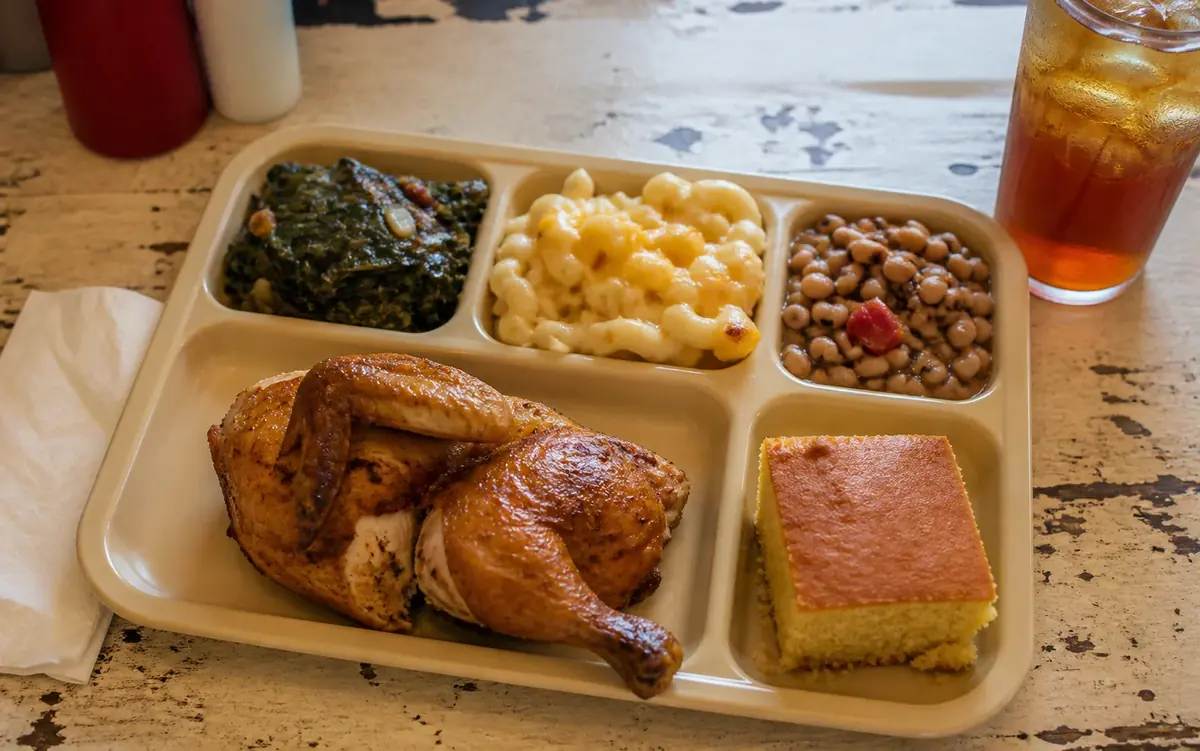
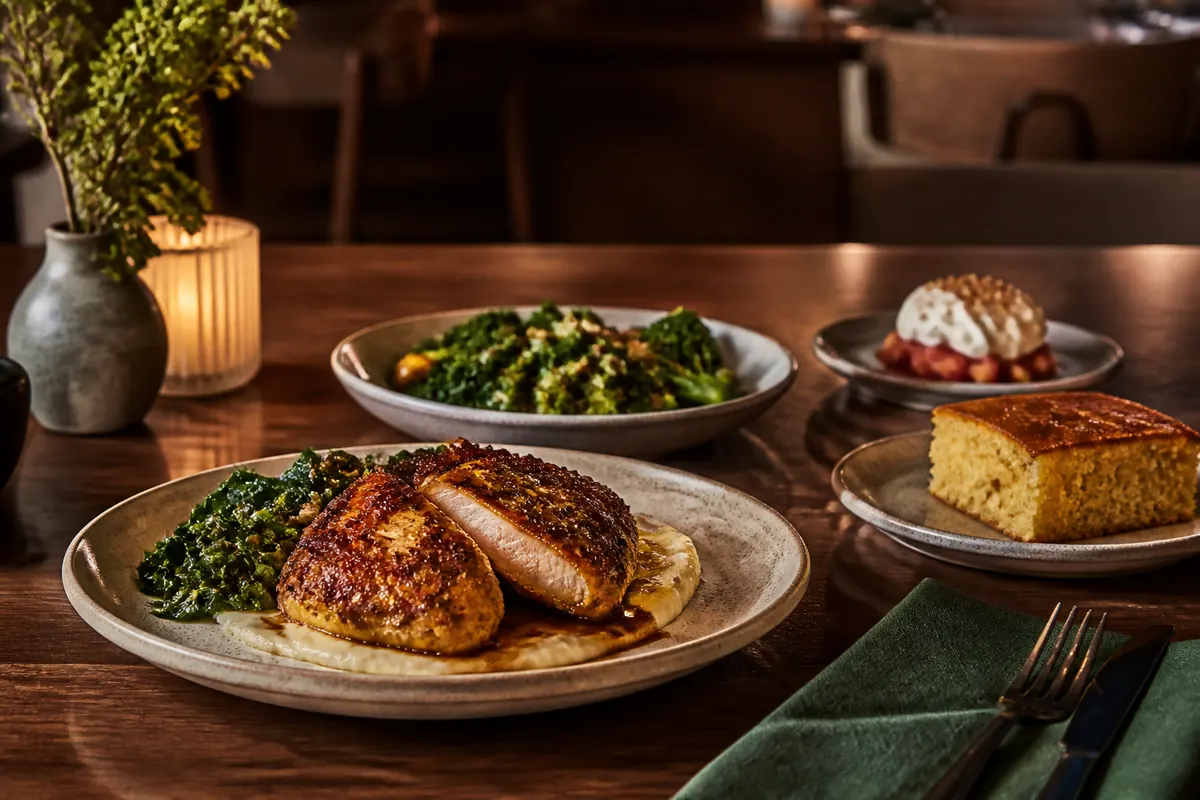
A meat-and-three generally pairs one main dish with three side dishes, though restaurants may offer one-, two-, or four-side combinations. Cornbread, rolls, tea, and dessert may be separate or included depending on the business.
The format appears across the South and has a strong Nashville history. Nashville made the format part of its everyday rhythm, even though the tradition belongs to the wider South.
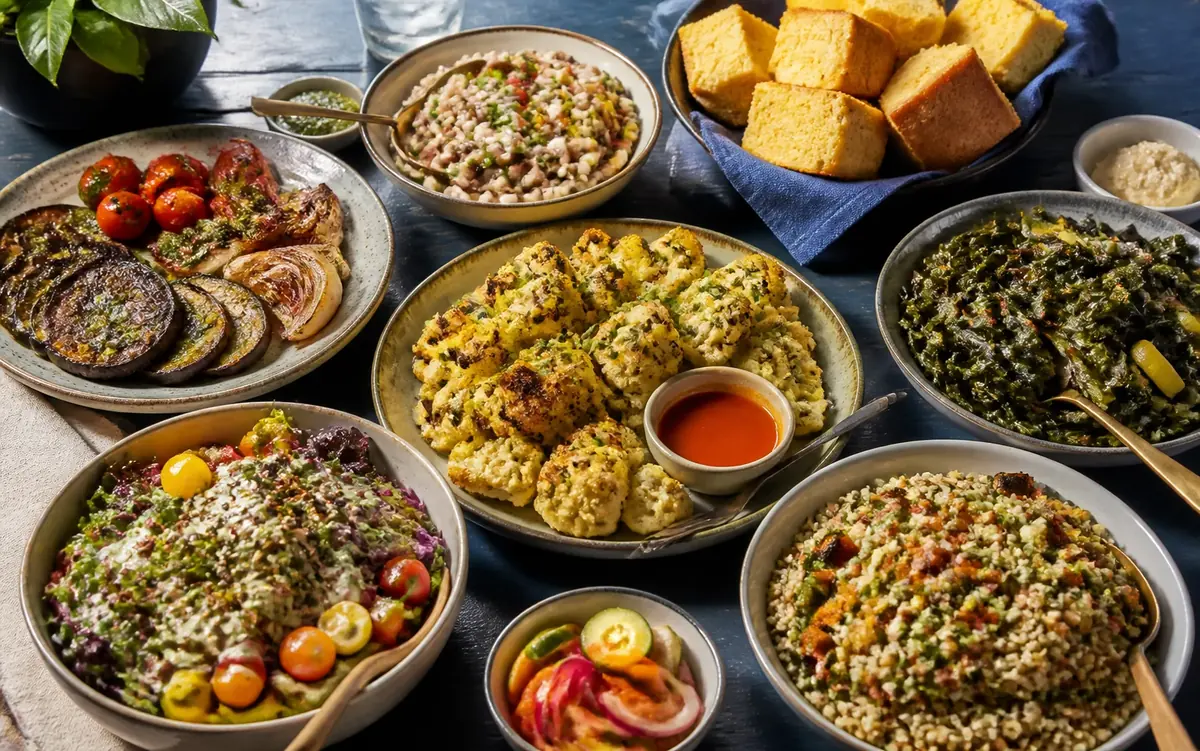
Menus often rotate by weekday. Fried chicken, roast beef, pork chops, country-style steak, baked fish, or other mains may appear beside beans, greens, macaroni and cheese, mashed potatoes, cabbage, corn, squash, and seasonal vegetables.
Decide on a main and backup before reaching the server. Ask which sides contain meat, dairy, or other allergens.
Move along the line, order each item as you reach it, and pay at the end. Seating may be open.
Order the full plate at a register or counter, then carry it away or wait for a number.
Shared bowls and platters may be brought to the table. Confirm portion and refill rules before ordering.
A posted plate price may exclude drinks, dessert, premium mains, or extra sides. Check the board rather than assuming every combination costs the same.
Vegetable does not always mean vegetarian. Greens, beans, cabbage, and other sides may contain pork, stock, butter, or other animal ingredients. Ask directly and remember that a side-only plate may be the practical option at a mixed kitchen.
Lunch lines reward decisiveness, but questions about ingredients and accessibility are reasonable. Follow the queue, clear the table when the restaurant asks, and tip according to the service provided.
The best plate often depends on the day. Look at the rotating mains, ask which vegetables just came out, and arrive early enough that the most popular dishes have not sold out.
Restaurants to know
 Vegetarian and vegan food
 Nashville food guides and stories